

 Tiếng Việt
Over the past few years, rooftop solar power has become one of the preferred solutions for businesses seeking to reduce electricity costs, enhance energy independence, and meet sustainability requirements. However, selecting high-quality solar modules alone is not sufficient to ensure stable system performance throughout its operational lifetime. In practice, the overall effectiveness of a project depends on the integration of multiple technical components, ranging from primary equipment to auxiliary systems and energy management solutions.
Solar Modules – The Power Generation Source of the System
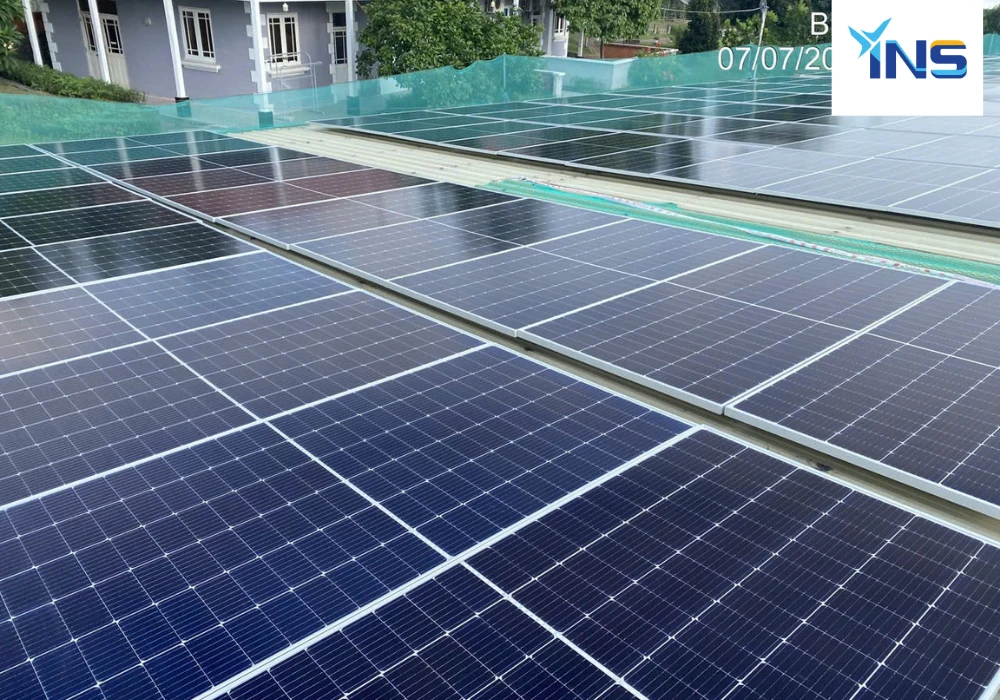
Solar modules (PV Modules) are the core component of a solar power project, responsible for converting solar irradiance into electrical energy. Overall system performance depends significantly on the quality of the PV modules, system layout, installation tilt angle, and actual operating conditions.
For industrial projects, selecting PV modules should not be based solely on power output. Factors such as durability, load-bearing capacity, degradation resistance, and suitability for the environmental conditions at the installation site must also be carefully considered.
Inverter – The “Brain” of the Solar Power System
While solar modules generate electricity, the inverter is responsible for converting direct current (DC) into alternating current (AC) for industrial and commercial use. In addition to power conversion, the inverter performs several critical functions, including system monitoring, power generation optimization, system protection during faults, and data collection for energy management. It is therefore considered one of the most critical components directly affecting the overall performance of the project.
Mounting Structure and Auxiliary Infrastructure
One aspect that is often underestimated in solar power investments is the mounting structure and auxiliary infrastructure. In reality, these components are essential in determining the long-term durability and safety of the entire system.
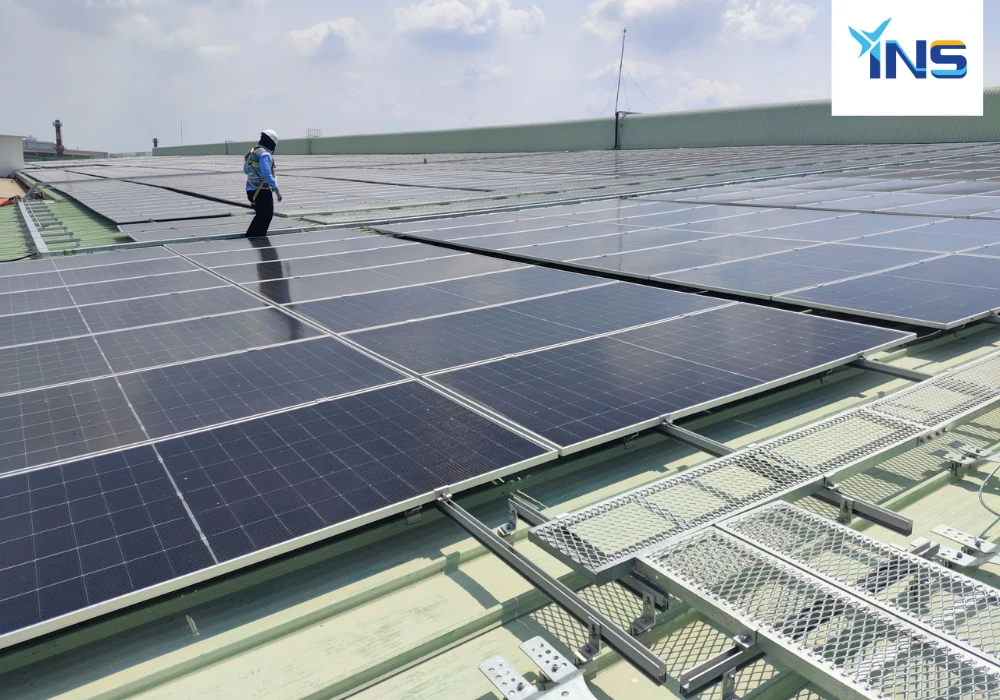
Components such as mounting structures, cable trays, grounding systems, lightning protection systems, electrical cables, and protection devices ensure stable system operation under various environmental conditions. If these components are not properly designed and installed in accordance with applicable standards, they can increase technical risks and reduce the project’s operational lifespan.
Battery Energy Storage System (BESS)
Along with the global energy transition, Battery Energy Storage Systems (BESS) are becoming an increasingly important component of industrial solar power projects. BESS enables excess electricity generated during the day to be stored and used during peak demand periods or when solar generation is unavailable. This solution helps businesses improve energy independence, optimize peak demand management, and reduce the risk of production interruptions.
Energy Management System (EMS)
While BESS stores electrical energy, the Energy Management System (EMS) is responsible for coordinating and optimizing the entire energy system. EMS collects real-time electricity consumption data and analyzes energy usage across different areas or production lines. Based on this information, businesses can make more informed operational decisions and optimize energy utilization among solar power, the utility grid, BESS, and other available energy sources.
As energy costs continue to rise, EMS is increasingly recognized as a critical tool for improving operational efficiency and reducing electricity expenses.
System Integration to Maximize Investment Efficiency
According to energy industry experts, the effectiveness of a solar power project should not be evaluated solely based on the capacity of the PV modules or the quality of the inverter. Instead, it depends on the seamless integration of the entire system.From power generation equipment, energy storage, and energy management solutions to auxiliary systems, every component should be designed, installed, and quality-controlled through a professional implementation process. This is also why businesses today are paying greater attention to the overall capabilities of EPC contractors rather than focusing solely on the initial investment cost.
Is your business looking for rooftop solar, BESS, and EMS solutions for your factory? Contact INS Energy for tailored solutions that optimize investment performance and provide comprehensive support throughout the entire project lifecycle.